
Custom corporate gift packs
Corporate gift packs built around useful custom drinkware.
Plan employee, client and event gift sets by locking the recipient, drinkware configuration, supporting components, decoration, packaging and delivery requirements in one bill of materials.

Answer first
How should a buyer plan a custom corporate gift pack?
Short answer: Start with the recipient and use moment, choose one practical bottle, tumbler or mug as the anchor, then add only components that support the same routine. Put the exact item versions, artwork, box, insert, labeling, pack-out and destination requirements into one controlled BOM before requesting comparable quotes.
A corporate gift pack is a system, not a shopping list. A bottle that fits the recipient but not the insert, a correct logo applied to the wrong color, or an attractive presentation box that raises shipping volume can turn individually acceptable items into a weak delivered set. The sourcing brief should therefore define the assembled unit first and treat every component as part of that unit.
Which drinkware-led set structure fits the program?
| Program | Useful anchor | Supporting set logic | Approval priority |
|---|---|---|---|
| Employee onboarding | Desk bottle, travel mug or tumbler matched to the working routine | Limit additions to items used during the same first-week or desk routine | Recipient names, pack-out accuracy and delivery locations |
| Client appreciation | Drinkware selected for the recipient rather than the broadest possible audience | Fewer coordinated components and restrained branding can protect perceived value | Finish, decoration hierarchy and presentation on opening |
| Conference or event | Portable bottle or cup compatible with the handout plan | Keep the set easy to carry, count, distribute and repack | Event date, on-site handling and master-carton plan |
| Multi-location employee program | One repeatable drinkware configuration | Standardize the core set; document any location-specific insert or label | Version control, address data and fulfillment ownership |
For deeper program planning, compare the existing guides for employee welcome kits, client-appreciation drinkware sets and trade-show gift packs. Those pages cover distinct use cases; this page remains the cross-program decision hub.

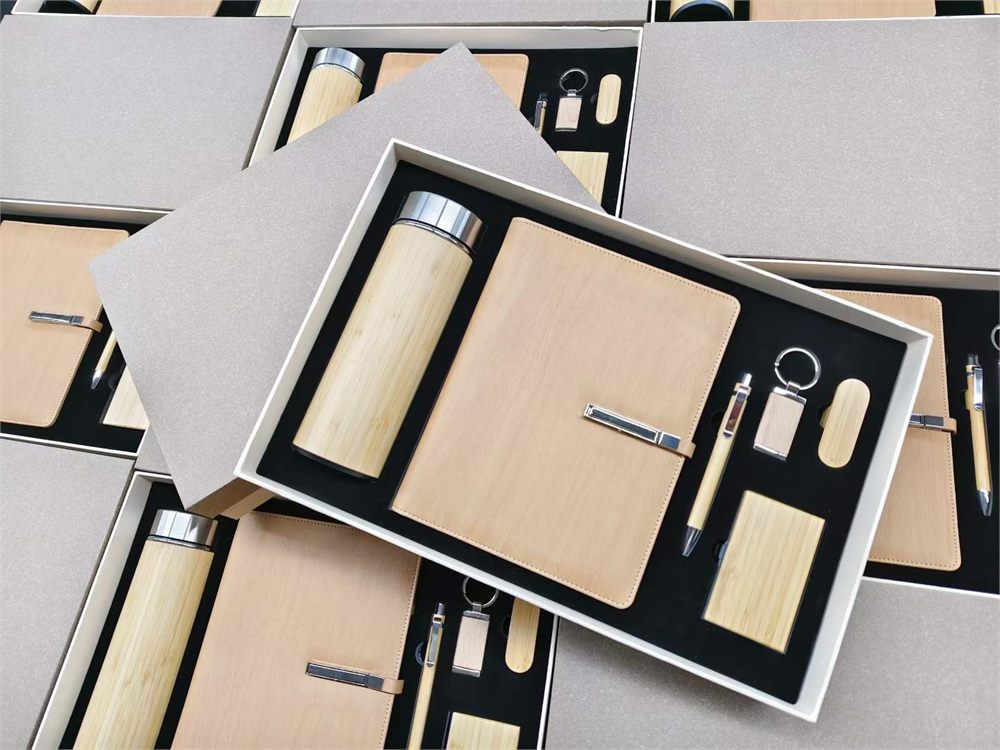

Why use drinkware as the anchor instead of adding more items?
Current category-level research supports prioritizing usefulness over item count. PPAI's Product Power 2026 study of more than 5,000 U.S. respondents reports that durability, design and material are important retention factors and that branded bottles or tumblers are used daily by many respondents. ASI's 2026 drinkware study likewise reports usefulness as the leading reason respondents would keep branded drinkware. These findings do not predict the result of a specific program, but they support a practical sourcing rule: select one well-matched daily-use anchor before expanding the set.
Review the source scope directly at PPAI Product Power 2026 and ASI's 2026 drinkware study. Both are consumer studies, not proof of Impringift product performance or of a buyer's campaign outcome.
What belongs in the gift-set BOM?
The BOM should be detailed enough that two suppliers quote the same assembled configuration. Use one controlled line for every product, packaging component, decoration and document requirement.
- Program identity: recipient group, use moment, quantity, destination country and required delivery date.
- Drinkware identity: exact model or approved reference, intended use, capacity requirement, body, lid, seal, straw or handle configuration, color and care expectations.
- Supporting components: exact item version, quantity per set, color and substitution rule. Do not accept “similar item” unless the approval path is defined.
- Decoration: artwork file and version, size, location, color reference, process proposal and acceptance view for every decorated surface.
- Presentation packaging: box construction, finish, insert material, cavities, printed insert, individual protection, label and opening sequence.
- Shipping pack-out: units per master carton, protection method, carton marks, destination labels and who owns address-level fulfillment.
- Evidence: target-market documents or testing requested for the exact configuration, with the responsible party and timing stated.
What are the real trade-offs between common pack formats?
| Format | Strength | Trade-off to review |
|---|---|---|
| Drinkware plus printed insert | Simple component control and a clear message | The insert must not scratch the product or move during transit |
| Drinkware plus one companion item | Creates a coherent routine without a crowded box | Both items must fit the same recipient and decoration hierarchy |
| Multi-item presentation box | Stronger opening experience and more space for storytelling | More cavities, versions and surfaces increase approval and pack-out risk |
| Mailer-ready individual pack | Supports distributed recipients and address-level delivery | Outer protection, labels, privacy handling and failed-delivery ownership need separate decisions |
Which approval gates reduce gift-pack order risk?
- Configuration lock: approve the exact BOM and record every permitted substitution before artwork or sampling.
- Artwork proof: approve version, scale, position and color references for the drinkware, companion items, box and insert separately.
- Assembled sample: evaluate the same combination buyers will receive, including fit, opening sequence, protection and visible presentation.
- Production inspection plan: agree on defect categories, lot definition, sample method and acceptance rule before production is complete. ISO 2859-1:2026 provides a current system for AQL-indexed lot-by-lot inspection by attributes, but it does not choose the buyer's defect limits or sampling plan.
- Packed-shipping review: treat distribution performance as a shipping-unit question. ASTM D4169-23 provides a framework for evaluating shipping units under representative distribution sequences; it is not a universal drinkware, closure or gift-box pass claim.
How should environmental and packaging claims enter the RFQ?
Ask for the destination market, exact material or recycled-content claim, percentage and basis, supporting document, and the component to which the claim applies. Avoid broad words such as “green,” “eco-friendly” or “sustainable” when the specific benefit and evidence are not defined. The U.S. FTC Green Guides explain why environmental claims must be specific and substantiated.
For EU-bound packaging, the European Commission states that Regulation (EU) 2025/40 generally applies from 12 August 2026 and covers packaging across its life cycle. Put destination, packaging composition, labeling and documentation questions into the brief early, then obtain market-specific compliance review for the actual pack. See the Commission's packaging-waste overview. This sourcing guide is not legal advice.
What should a corporate gift-pack RFQ include?
- Buyer company and project owner
- Recipient group and intended use moment
- Quantity, destination country and required delivery date
- Preferred bottle, tumbler or mug direction and any non-negotiable use constraints
- Supporting components and the allowed substitution rule
- Artwork files, decoration locations and color references
- Box, insert, individual protection, label and printed-message requirements
- Sample stages and decision owners
- Inspection, packed-shipping and destination-market evidence requirements
- Quote structure: itemized products, decoration, packaging, sampling and shipping assumptions
Frequently asked questions about custom corporate gift packs
How many items should a corporate gift pack contain?
There is no universal count. Start with one useful anchor and add a component only when it supports the same recipient routine or message. More items increase BOM, decoration, fit and pack-out decisions.
Can drinkware and packaging use different logo treatments?
Yes, but approve a hierarchy. A subtle product mark, a stronger box mark and a message card can work together when each artwork version, size, color and location is documented.
When is an assembled sample most useful?
Use it when the final decision depends on component fit, color coordination, insert performance, opening experience or protection in transit. A product-only sample cannot approve the complete set.
Can a supplier substitute a component after approval?
Only under the rule written in the BOM. Require notice, evidence for the replacement and a defined reapproval step before the substituted configuration enters production.
What should be sent for a useful first quote?
Send the company, recipient, quantity, destination, required date, drinkware direction, components, artwork, packaging level and evidence requirements. If a fact is undecided, label it as open instead of asking suppliers to guess.
Build a comparable RFQ
Send one drinkware-led gift-set brief, not a list of unrelated products.
Include your company, recipient group, quantity, destination, target date, artwork and packaging direction. Commercial terms, availability, materials, testing and documentation will need confirmation for the exact configuration.
Request a corporate gift-pack quote